Mar 2025 – Dec 2025
EDbot
EDLAB, Maastricht University's teaching centre, wanted visitors to its tenth-anniversary exhibition to reflect on education. I designed and built EDbot, a chatbot that asks questions instead of giving answers, and the exhibition's website. EDbot ends by writing the visitor's story and drawing their pop-art portrait. It held about 200 conversations.
Workflow
Section 01 / 04
How a conversation works
01Keep the conversation on education
A fast model checks whether the visitor's answer is about education at UM. If not, EDbot asks one question that leads back. If so, the main model asks the next.
02Decide when the visitor has said enough
After each answer, a second model scores themes, reasons and consistency. With enough points, or after three or four answers on topic, EDbot writes the story and draws the portrait.
Features
Section 02 / 04
What it does
A reflective conversation
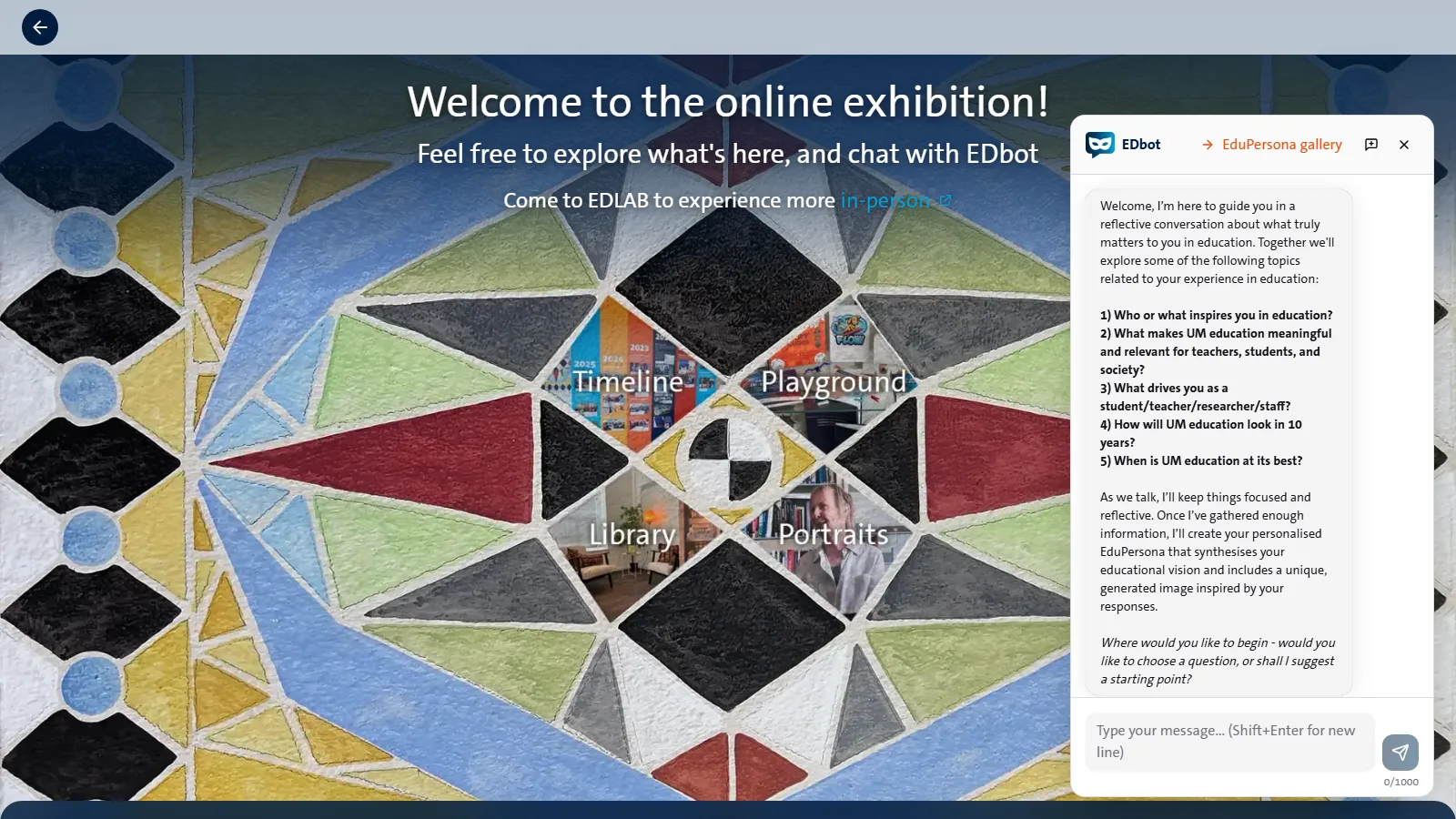
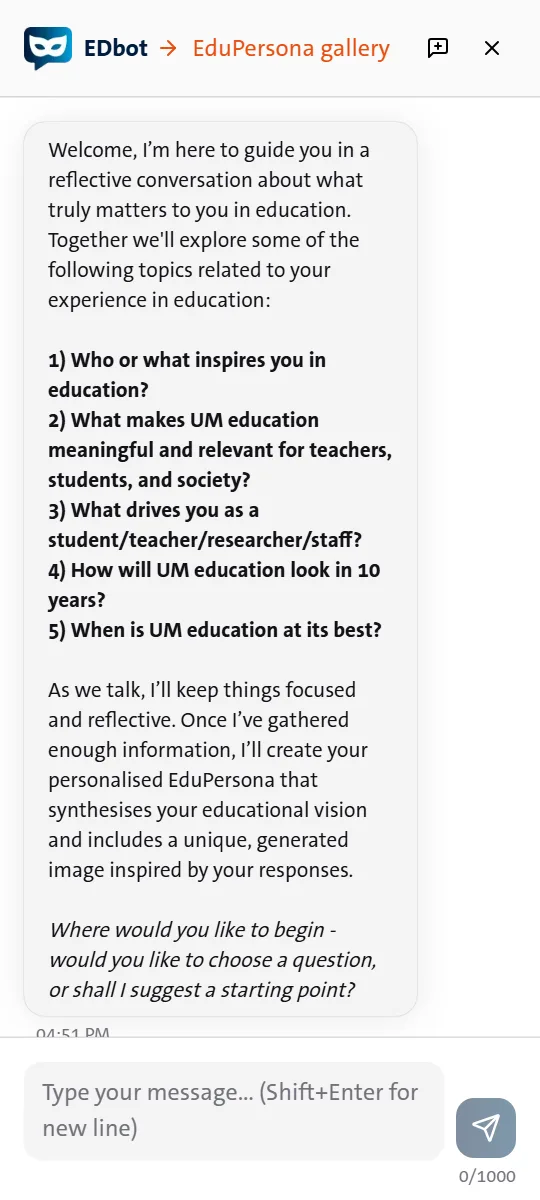
EDbot opens with five questions about education at UM, asks where to begin and replies in the visitor's language.
A portrait to keep
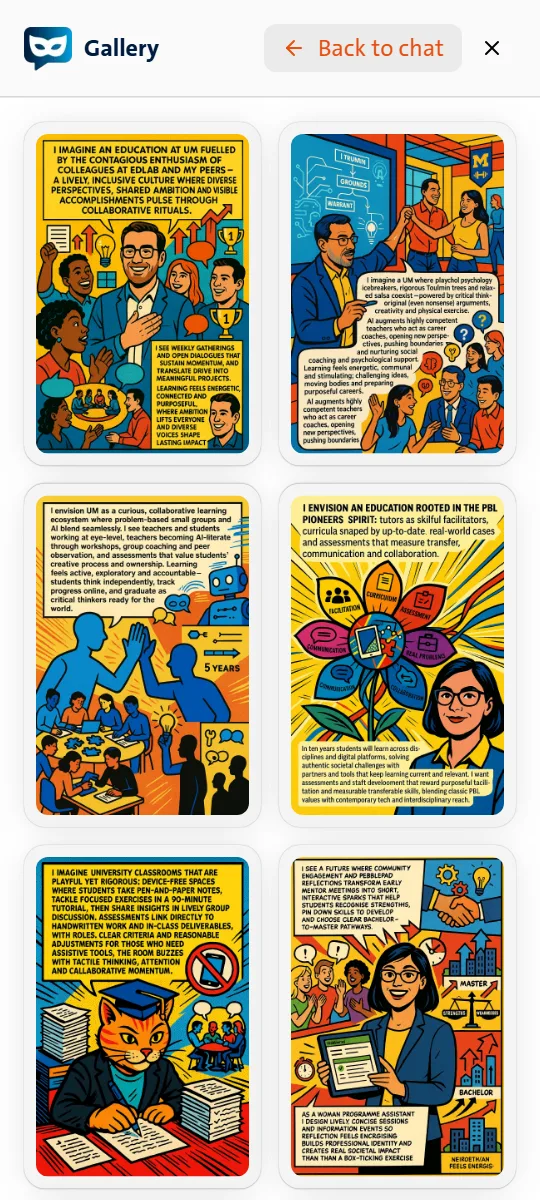
Visitors download a pop-art portrait with their story written into it, and browse other visitors' portraits in a gallery.

The online exhibition
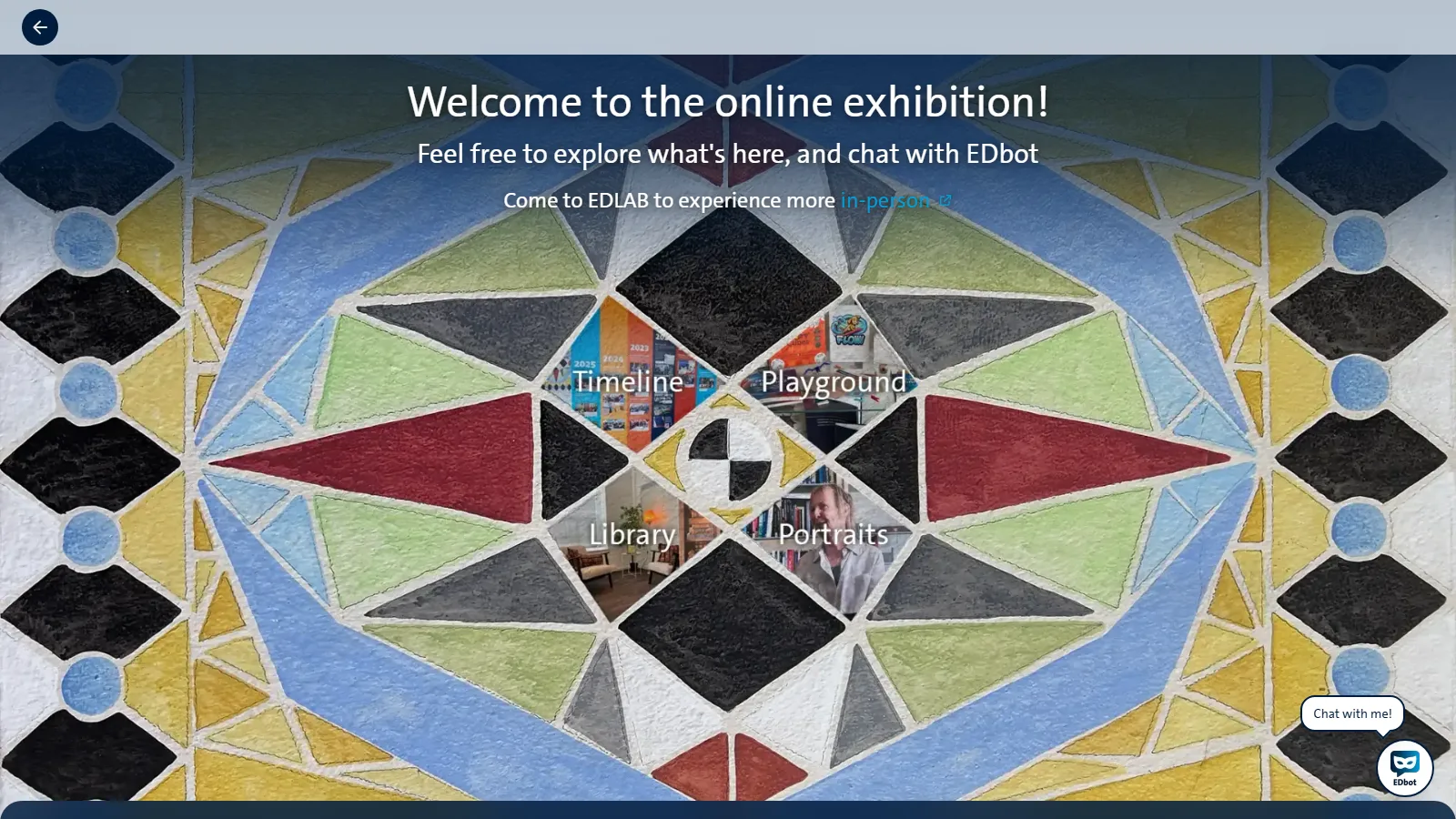
Visitors entered through a mosaic and chose one of four rooms, with EDbot one tap away on every page.

Four rooms
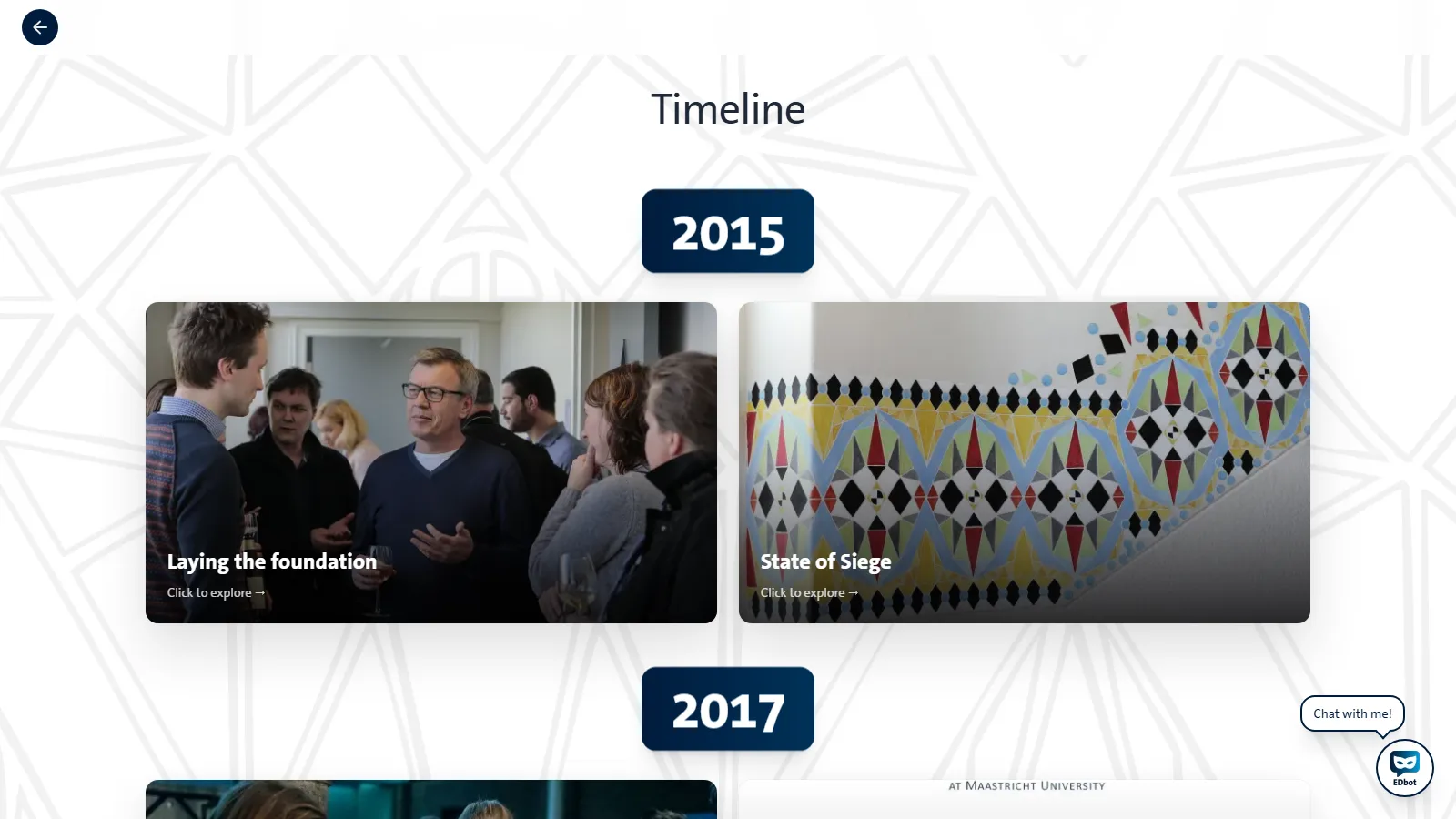
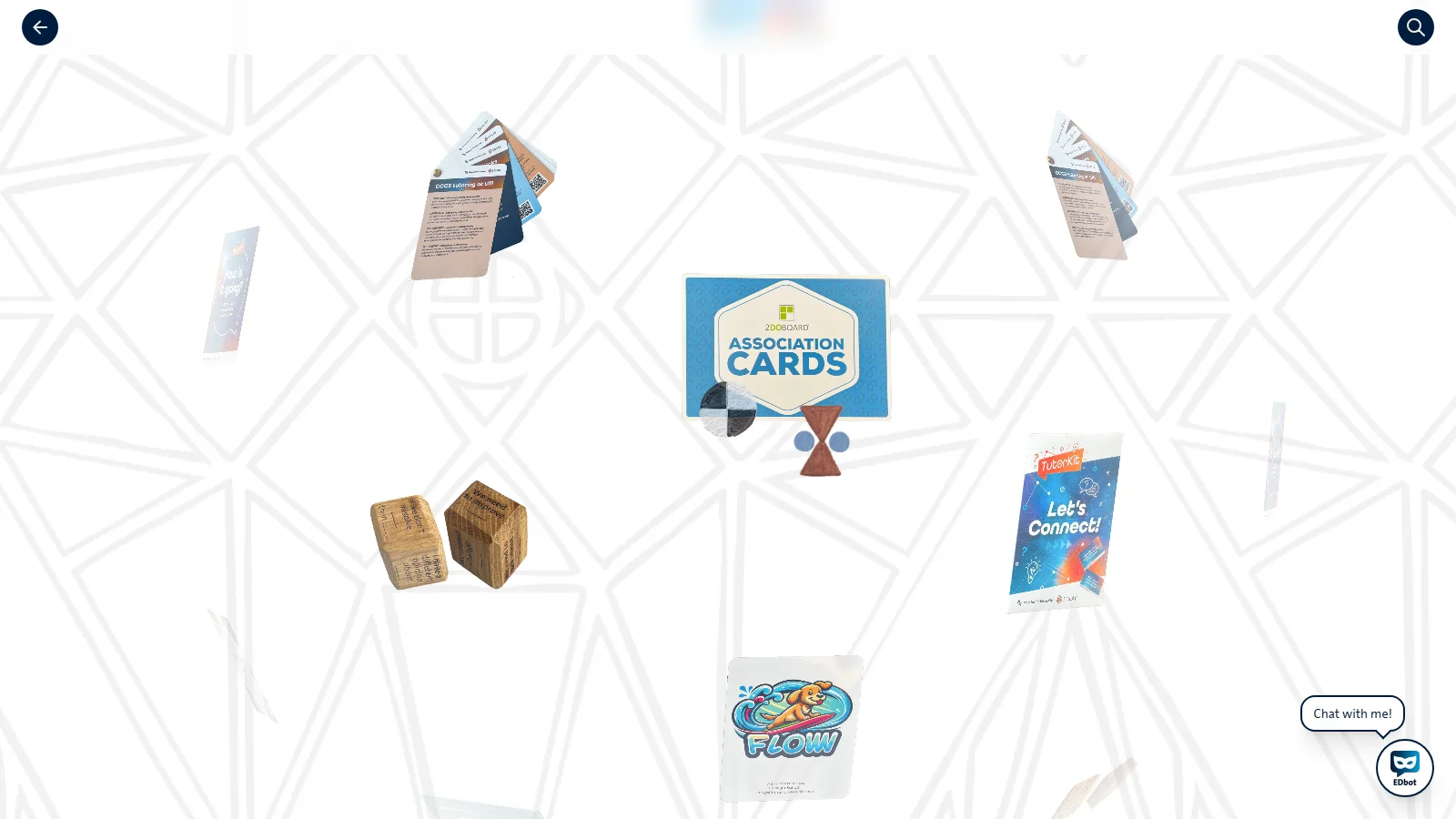
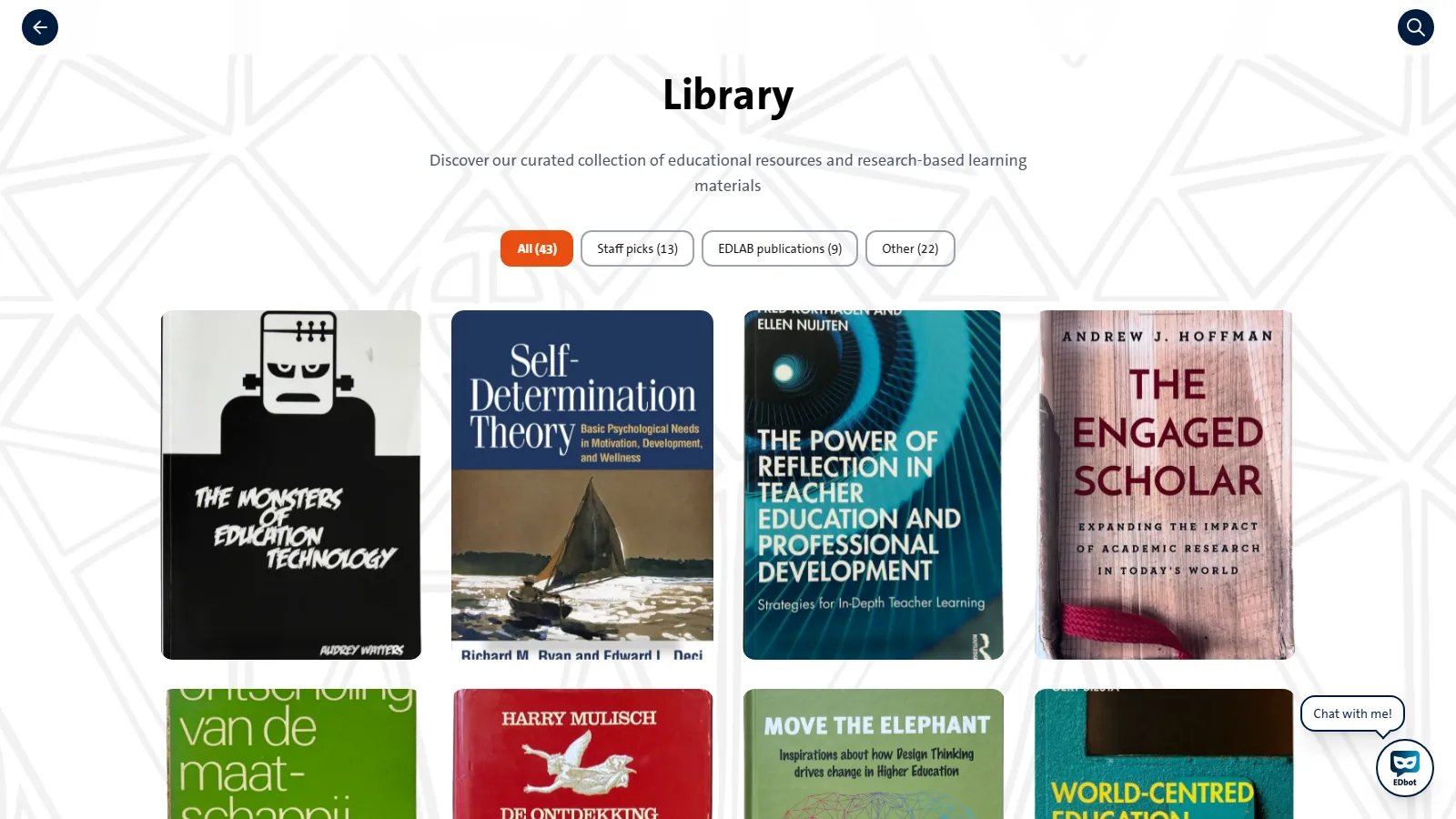
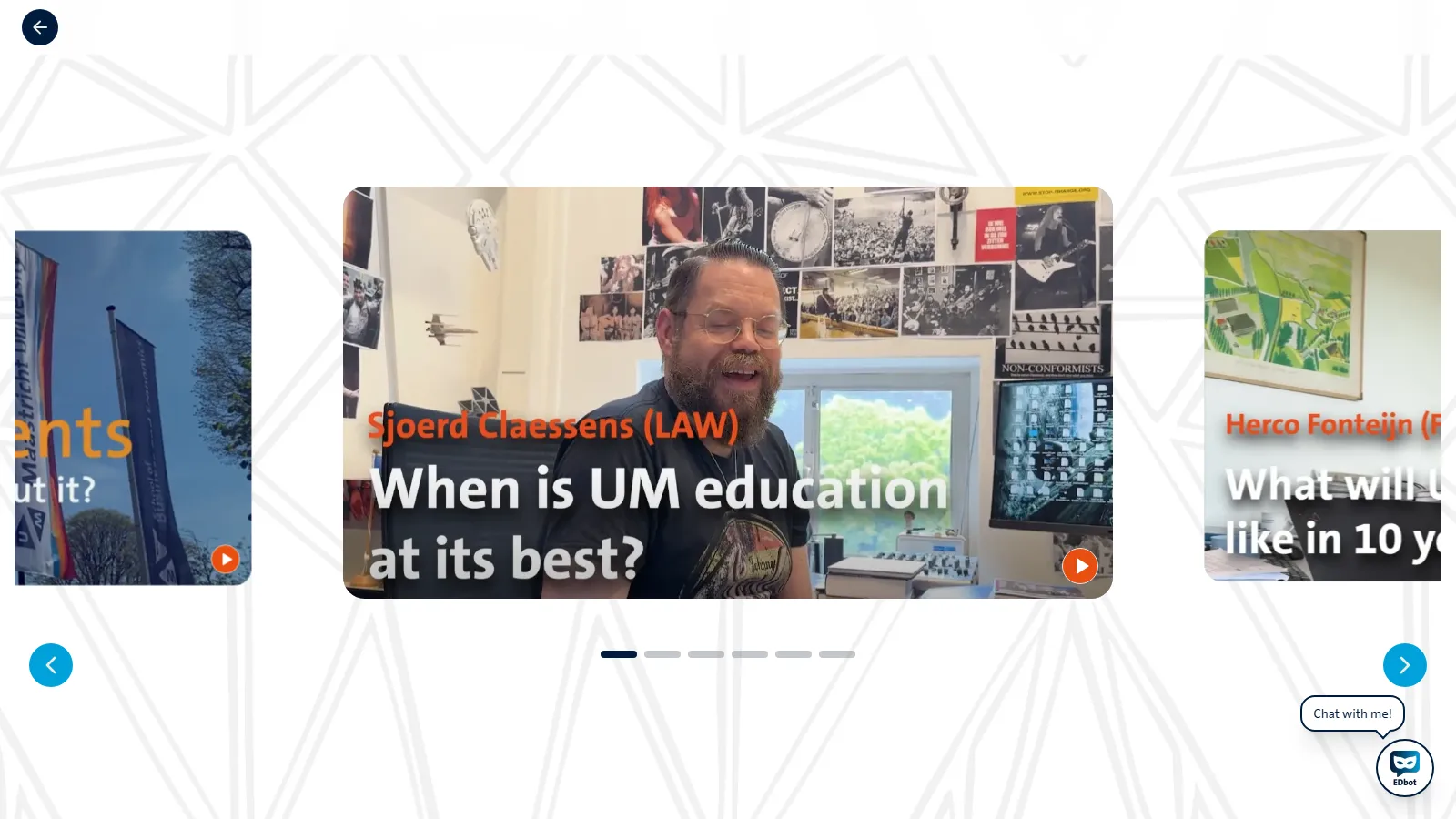
A ten-year timeline, EDLAB's games on a sphere, a library of 43 books and teachers answering EDbot's questions on video.
Motivation
Section 03 / 04
Why I built it
I started work on EDLAB X, EDLAB's anniversary exhibition, in March 2025, and built its website over the summer. EDLAB supplied the content.
In August I built EDbot. I based it on Socratic dialogue, which asks why more than what, and EDLAB helped me set its questions. The exhibition opened on 15 September 2025, and the website closed in December.
Stack
Section 04 / 04
What it runs on
- Next.js, React, TypeScript, Tailwind CSS
- The website and the chat window
- OpenAI API
- The models that ask the questions, write the story and draw the portrait
- LangGraph
- Runs the models in order on each turn
- MongoDB
- Saving conversations
- Vercel
- Hosting